
Boiler Pressure Too Low? How to Increase It Step by Step
This page is for a gauge that is reading too low, usually below 1 bar cold, or a boiler locked out on a low-pressure code. To increase boiler pressure, switch the boiler off and let it cool, open the filling loop underneath the boiler until the gauge reads between 1 and 1.5 bar, then close it fully. If your gauge is above the green band instead, you want the opposite job, letting the pressure back down. If it falls away again within days of topping up, that is pressure that will not stay up, and topping up is not the fix.
Last updated - 21/08/2026
Estimated reading time - 13 minutes
Boiler pressure too low: the short version
Topping up a boiler is a homeowner job. Baxi says so in plain terms: "It is quite simple to top up the water pressure in your boiler. You should be able to do it yourself without having to call a heating engineer." Here is the whole thing in five steps, with the detail for each type of filling loop further down.
- Switch the boiler off and let it cool down.
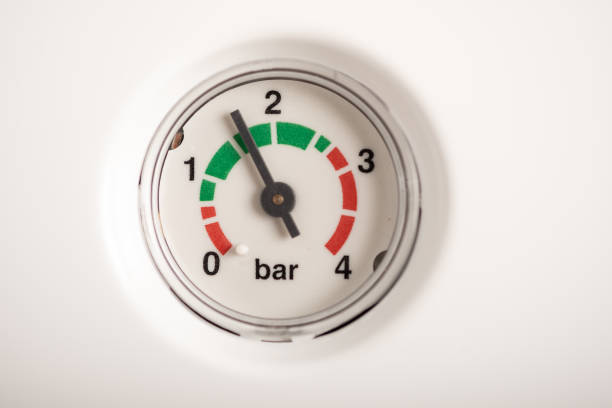
- Find the pressure gauge and read it. Below 1 bar on a cold system is what you are fixing.
- Find the filling loop, normally underneath the boiler. It is a lever, a key slot, a pair of small taps, or a braided hose.
- Open it slowly and watch the needle climb. Ideal Heating's instruction is to "slowly open the filling valve or valves while watching the boiler's pressure gauge".
- Close it fully at 1 to 1.5 bar, then switch the boiler back on. Ideal Heating warns that "leaving a filling valve partially open may cause the system pressure to continue rising".
None of that involves opening the boiler or touching the gas supply, which is why it is safe for you to do. Where the line sits is further down.
Fill to 1 to 1.5 bar cold, and stop there
That is the number for this job. Ideal Heating puts it plainly: "The normal cold operating pressure is between 1.0 and 1.5 bar. On most pressure gauges, this range is indicated by green markings."
Fill to the bottom of that range rather than the top, because water expands as it heats. A cold system filled to 2 bar will be well past 2 bar an hour into a January evening, and Baxi notes that where pressure goes too high "a safety valve is fitted that will discharge water to keep the pressure at a safe level". That discharge is water leaving your system for good, which puts you straight back to a low gauge.
Every maker publishes a slightly different figure, and there is a separate reading for a system that is running rather than cold. We have not repeated all of that here: it is set out maker by maker in the bar readings a healthy boiler should show.
Find your filling loop first
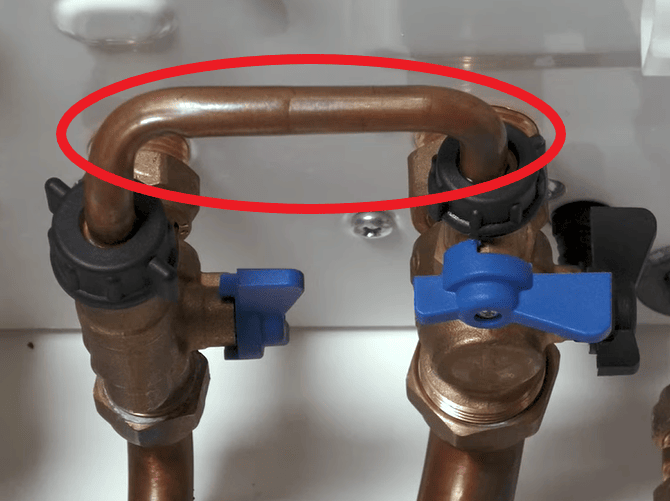
Every sealed system is topped up the same way: mains water is let in through a filling loop until the gauge reads right. Only the shape of the tap changes. Look underneath the boiler, or behind the drop-down flap on the front, and you will find one of four things.
- A blue or grey lever sitting flush under the boiler. This is a keyless internal filling link.
- A small slot with a plastic key in it, or a key clipped to the tray underneath. This is a keyed internal filling loop.
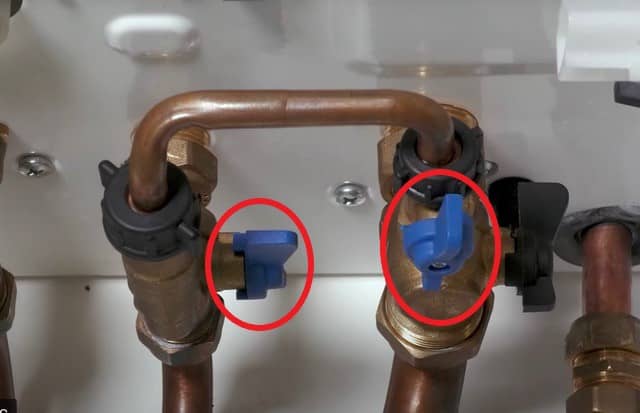
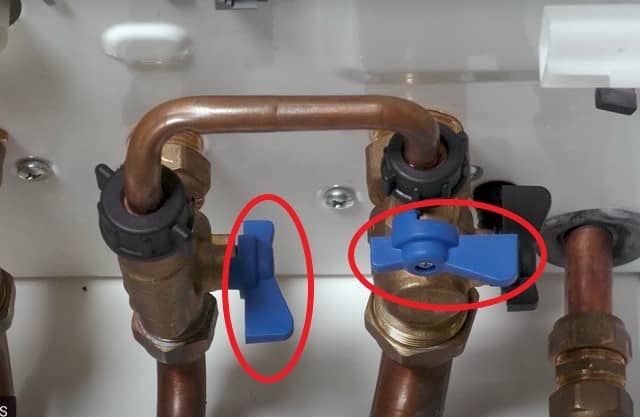
- Two small taps either side of a short pipe, with a screwdriver slot or a small handle on each.
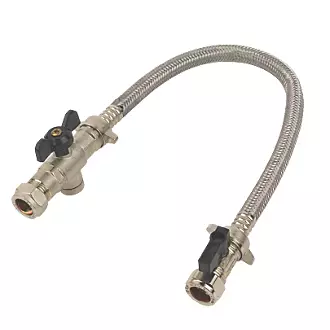
- A braided silver hose looping between two pipes. Ideal Heating describes it as "a flexible silver filling-loop hose underneath the boiler, connecting two pipes in the shape of a horseshoe".
One exception matters before you start. If you have a regular boiler, also called a heat-only, conventional or open-vent boiler, there is usually no pressure gauge and nothing for you to top up. Those systems use a feed and expansion tank to keep the water level steady, so a low-pressure fix does not apply. If you are not sure which you have, our guides to the combi boiler and the system boiler will tell you in a minute.
Worth knowing why the loop is temporary rather than left open: heating water is not drinking water. The Water Supply (Water Fittings) Regulations 1999 require that "every water system shall contain an adequate device or devices for preventing backflow of fluid from any appliance, fitting or process from occurring" (Schedule 2, paragraph 15(1)). Your filling loop is a deliberate, short-lived bridge between the two. Close it properly, and if it is a key or a detachable hose, take it off again when you are finished.
How to increase boiler pressure, step by step
Four methods, one for each type of filling loop. Whichever you have, start the same way: switch the boiler off, let it cool, and read the gauge before you open anything. Your boiler manual is the final word on your specific model, so check it if anything below does not match what you are looking at.
Method 1: keyless internal filling loop (a lever)
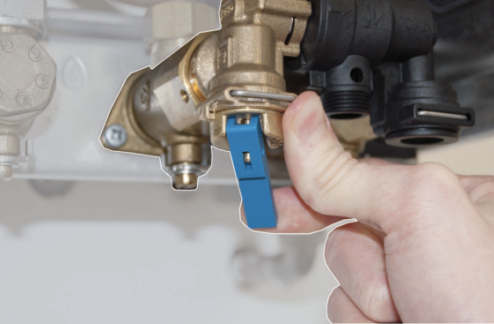
This is the quickest of the four and is common on newer combis. Worcester Bosch's own instruction for its keyless filling link is to "simply pull down the blue lever", then release it once the pressure passes one bar.
- Locate the lever at the bottom of the boiler, usually behind the flap.
- Pull the lever down and hold it. You will hear water running into the system.
- Watch the gauge, not the clock. The needle moves faster than people expect.
- Let go at 1 to 1.5 bar and check the lever has sprung fully back to closed.
Method 2: keyed internal filling loop
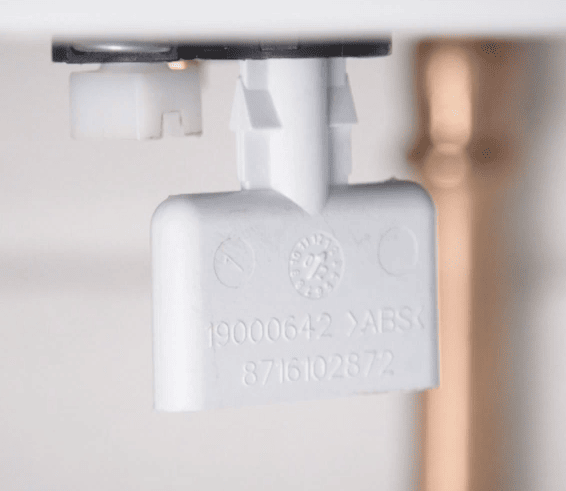
Worcester Bosch describes the keyed version: the key lives on the flap beneath the boiler, and "on the front right hand side you'll notice an open black port and this is where the key fits". You line the arrow on the key up with the open padlock symbol, push it in, then "turn the key and watch the pressure rise to just over one bar".
- Find the key. It is usually clipped inside the tray under the boiler, or was handed over at installation.
- Line up the arrow with the open padlock marking and push the key firmly into the port.
- Turn the key and watch the needle climb.
- Turn it back to the open padlock position at 1 to 1.5 bar, then withdraw the key. A few drops of water when you pull it out is normal, so have a cloth ready.
- Put the key back where you found it. You will want it again in six months.
Method 3: twin taps on an internal loop
Older combis and plenty of Baxi and Ideal installs use two small taps either side of a short filling pipe. A tap is open when its handle or screwdriver slot runs in line with the pipe, and closed when it sits across it.
- Check the loop is properly attached at both ends and the nuts are hand-tight.
- Open the first tap fully, so it runs in line with the pipe.
- Open the second tap slowly. You should hear water moving. Ideal Heating's wording is to open the valves slowly while watching the gauge, and slowly is the operative word: the last 0.5 bar arrives quickly.
- Close the second tap at 1 to 1.5 bar, then close the first.
- Check both are fully closed, sitting across the pipe rather than along it.
Method 4: external filling loop (usually a system boiler)
System boilers often keep the filling loop near the hot water cylinder rather than at the appliance. Worcester Bosch's steps for an external loop are to attach the hose to each side of the valve, open the mains cold tap, then open the second tap to let water in, watching the gauge and stopping at around one bar.
- Find the braided hose near the cylinder, and check both ends are connected and tight.
- Open the valve on the mains side. Some have handles, some need a flat-head screwdriver turned so the slot runs in line with the pipe.
- Open the second valve slowly until you hear water flowing.
- Close the mains-side valve at 1 to 1.5 bar on the gauge, which on these systems is often mounted near the cylinder rather than on the boiler.
- Close the second valve and, if the hose is designed to be removed, disconnect it and stow it.
If you have a system or heat-only boiler and you cannot identify the loop with any confidence, do not guess. Ideal Heating's advice for exactly that situation is to "contact your installer or a suitably qualified heating engineer for assistance".
What if the pressure will not rise?
If you have opened the loop and the needle has not moved at all, stop rather than keep it open. Vaillant's guidance is that "if you have fixed a leak and repressurised the system but the boiler pressure is still too low you should immediately close the filling loop and call a qualified engineer".
Four things usually explain it, and only two are yours to fix:
- The mains water is off, or the isolating valve feeding the loop is closed. Check the stopcock.
- You have opened only one of two taps. A twin-tap loop needs both.
- The gauge itself has failed. If the boiler is running normally and only the needle is stuck, that is an engineer's diagnosis, not a top-up.
- Water is leaving as fast as it goes in. That is a leak, and it needs finding.
The same applies if the pressure rises, then falls again within a day or two. Ideal Heating asks customers to get in touch if "the pressure drops repeatedly over days or weeks", if "the pressure falls to zero", or if "you need to top up the system more than once or twice a year". Twice a year is maintenance. Every fortnight is a fault. Our guide to a boiler losing pressure goes through what an engineer looks for.
What if I put in too much?
It happens, and it is easily undone. If the needle has gone past 2 bar on a cold system, bleed a radiator a few seconds at a time, re-checking the gauge between goes, because it drops faster than it filled. From there you have the opposite symptom to the one this page is about, so the full job, including the drain-valve route and what to do when bleeding will not bring it down, is in how to bring high boiler pressure back down.
Will you be doing this again next week?
Topping up treats the symptom, so the reading that matters now is the next one. Two harmless explanations cover most single drops: you bled the radiators recently, which lets a little water out along with the air, or the system has sat idle over a summer with the heating off. In both cases the top-up you have just done is the whole fix and the gauge will hold.
Anything else means water is leaving the system, and Vaillant is blunt about the usual answer: "If your system pressure is low it means there is not enough water in the system. This is usually because of a leak." Leaks, a passing pressure relief valve and a failed expansion vessel each look different on the gauge and each need an engineer rather than another top-up. Rather than repeat that here, we have put the whole diagnosis in why a boiler keeps losing pressure, including what an engineer checks and in what order.
Low pressure fault codes by make
Most modern boilers will not just run quietly at low pressure: they shut down and show a code. If yours has, the fix is still the filling loop, but the code tells you what the boiler measured. We have written up the common ones:
- Worcester Bosch H07 low pressure warning
- Ideal F1 low pressure lockout
- Vaillant F22 low water pressure
- Baxi E119 low water pressure
- Glow-worm F22 low water pressure
A code that clears after a top-up is the system working as designed. A code that comes straight back is telling you the pressure is not the whole story.
When to stop and call a Gas Safe engineer
Reading the gauge and using the filling loop are yours. Opening the boiler is not, and neither is anything touching the gas supply. HSE states it plainly: "Anyone employed to work on gas appliances in domestic premises must be a Gas Safe registered engineer and competent in that area of gas work."
Book an engineer if any of these are true:
- The pressure will not rise, or will not hold for more than a few days.
- You are topping up far more often than the once or twice a year Ideal Heating treats as routine.
- There are damp patches, drips or staining near pipework, radiator valves or the boiler itself.
- Water is running from a small pipe outside, which points at the pressure relief valve.
- The pressure swings by more than about a bar between cold and hot.
- The boiler locks out again after one reset done the way your manual describes.
If you smell gas, deal with that first and leave the pressure alone. HSE's advice is to call the National Gas Emergency Service on 0800 111 999, open all the doors and windows, and shut off the gas supply at the meter control valve if you know where it is. Do not smoke, use naked flames, or operate any electrical switch.
If you would rather someone else looked at it, ask us for a free callback and tell us what the gauge is doing. One-off repair appointments run Monday to Friday, 09:00 to 17:00.
Tired of topping it up?
Smart Plan is a service plan, not insurance. Cover is for future breakdowns, not a fault your boiler is already showing, so if the pressure is dropping today, book a one-off repair for that one and use cover for the next fault. The boiler and central heating module covers parts and labour up to £500 in a 12-month period if your boiler is under 7 years old, or up to £200 if it is over 7. We work with a national network of thousands of Gas Safe registered engineers, and within our call-out hours of Monday to Friday, 08:00 to 18:00, we aim to get an engineer out to you within two working days. A £95 call-out fee applies in your first 30 days, and to faults the plan does not cover, no-access visits and early annual-service requests; cover itself still applies right through those 30 days. Using a service starts a 12-month agreement period. From UK Boiler Company Ltd, trading since 2014. See what the boiler and central heating module includes.
How to increase boiler pressure: FAQs
How do I increase boiler pressure without a filling loop?
You almost certainly have one, it just may not look like a loop. On many combis it is a lever or a keyed port built into the underside of the boiler; on system boilers it is often a braided hose near the hot water cylinder. If none of the four types is there, you may have a regular open-vent boiler, which has no filling loop and no gauge because a feed and expansion tank keeps the water level up. If the boiler has a gauge but you cannot find the loop, Ideal Heating's advice is to contact your installer or a suitably qualified heating engineer.
Should the boiler be on or off when I increase the pressure?
Off, and cold. Water expands as it heats, so filling a hot system to 1.5 bar leaves you under-pressured once it cools, and filling while the boiler fires makes the gauge a moving target. Switch it off, let it cool, then fill.
How long does it take to repressurise a boiler?
The filling itself is usually well under a minute, which is precisely why it catches people out. Open the valve slowly, keep your eyes on the needle rather than the tap, and be ready to close it. Ideal Heating's instruction is to open the filling valve or valves slowly while watching the gauge.
How often should I need to increase my boiler pressure?
Ideal Heating treats once or twice a year as routine. Its published advice is to contact it if "you need to top up the system more than once or twice a year", or if "the pressure drops repeatedly over days or weeks". If you are doing it monthly, the top-up is not the fix. Something is letting water out.
What happens if I increase boiler pressure too much?
Fill to 1 to 1.5 bar cold, because the water expands as it heats and the gauge reads higher once the heating is running. If the hot pressure climbs far enough, the safety valve does its job. Baxi describes it as fitted to "discharge water to keep the pressure at a safe level". Nothing dramatic happens, but you lose water, the pressure then drops too low, and you are back where you started. Bleed a radiator to bring it down, or read our guide to reducing boiler pressure.
Can low boiler pressure damage the boiler?
Modern boilers protect themselves by locking out and showing a low pressure code rather than running on, which is why H07, F1, F22 and E119 exist. The real risk is not the single low reading, it is ignoring what keeps causing it. Vaillant's position is that low pressure usually means a leak, and a leak left alone gets more expensive, not less.
Is topping up boiler pressure covered by a Smart Plan cover plan?
Topping up is something you do yourself in a couple of minutes, so it is not a call-out. What cover is for is the repair behind it, for example the leaking valve or the failed expansion vessel that keeps emptying the system. Cover applies to future breakdowns rather than a fault your boiler is already showing, so if the pressure problem is happening today, ask for a callback and we will talk you through a one-off repair instead.
A different pressure symptom? Start here
- The gauge is too high rather than too low: how to let the pressure back down.
- You top it up and it drops again: tracing where the water is going.
- You only want to know what the reading should be: the normal bar figures, cold and running.
- Yours is an Ideal boiler: the F1 code, where Ideal put the gauge, and Ideal’s own steps.
- How to bleed a radiator
- Boiler and central heating cover from Smart Plan.
Sources used on this page: Ideal Heating on topping up boiler pressure, Worcester Bosch on boiler pressure, Baxi on boiler pressure settings, Vaillant on boiler pressure HSE gas safety advice and the Water Supply (Water Fittings) Regulations 1999, Schedule 2.

Call us today
Customer service
0333 772 6247New customers
0333 772 6247Write to us
By email
hello@smart-plan.comBy post
2nd Floor, Melrose House
42 Dingwall Road
Croydon
CR0 2NE